

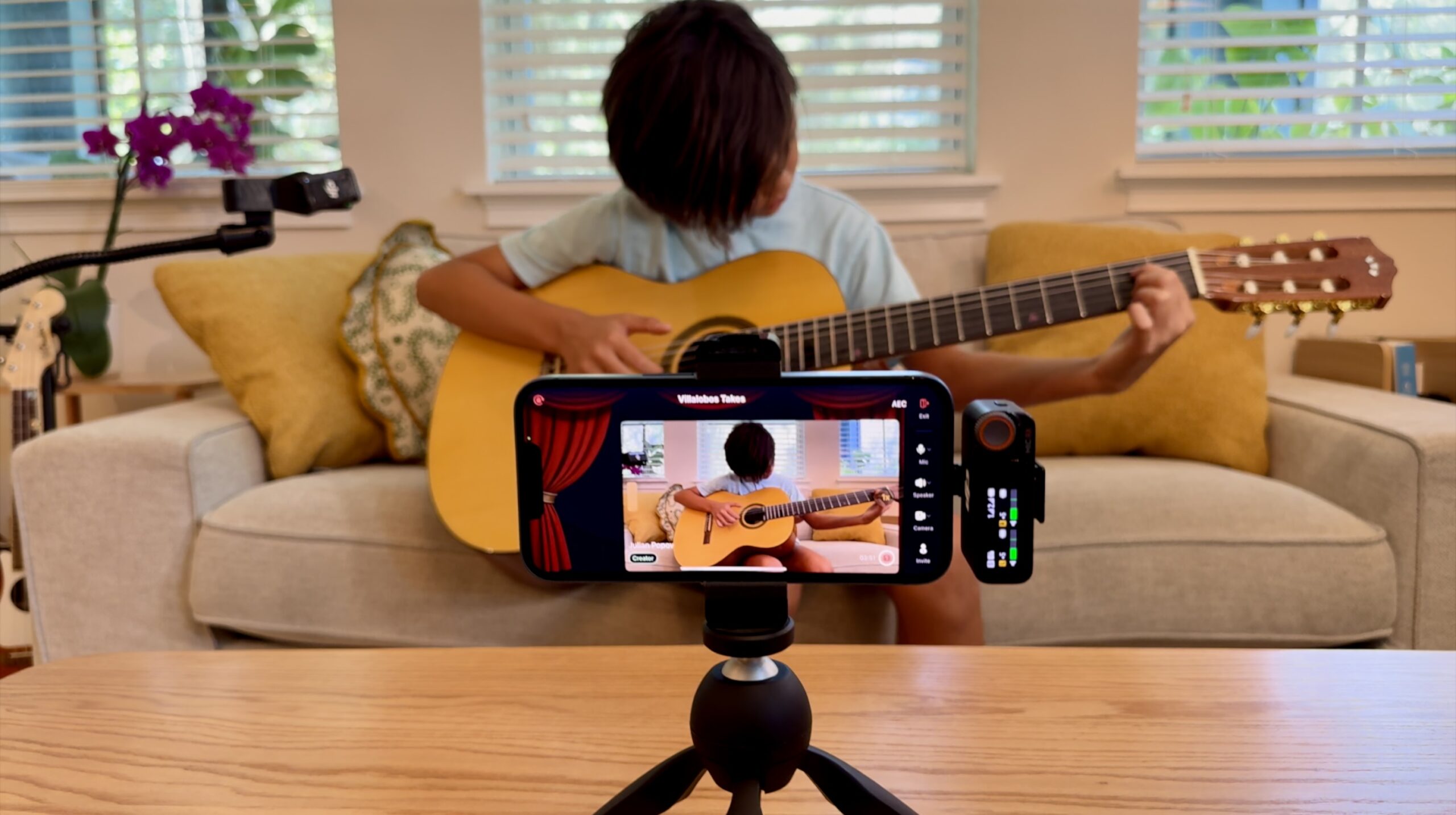
Practicing as a musician isn’t just about solo repetitions. It’s about getting that external ear to refine your performances in the moment. We’ve spent countless hours practicing alone, but the real breakthroughs came when we had someone listening in real time. With online music practice tools like TakeStage, you can transform a private session into a guided one without leaving your practice space.
The difference between good practice and great practice often comes down to timing. When you get feedback immediately, while the feel of the take is still fresh, you can make adjustments that actually stick. Online music practice platforms make this possible for every musician, whether you’re preparing for college auditions, competition performances, or simply trying to level up your playing.
The Problem with Traditional Practice Feedback
Back in the day, feedback meant scheduling lessons or sending rough recordings via mail. This delayed progress and killed momentum. You’d record on a basic cassette, play it back for your instructor later, and hope the notes still applied to what you were working on.
The disconnect was frustrating. By the time you got feedback and had to record again (having to stop playing, get to the playback device, listen, take notes, and get back to your instrument), you’d often moved on or forgotten the exact feel of the take. That immediacy was lost.
The traditional practice feedback loop looked like this:
Practice session → Record → End session → Send recording → Wait days → Get feedback → Try to remember what you were thinking → Apply feedback in next session
This cycle could take a week or more. For musicians preparing for time-sensitive auditions or trying to master difficult passages, that delay meant slower progress and more frustration.
Why Online Music Practice Changes Everything
Online music practice collapses that week-long cycle into minutes. Imagine starting a practice session where your teacher, coach, or trusted peer can hear you in real time. They can stop you mid-phrase, offer corrections, and have you try again immediately while your muscle memory is still warm.
This isn’t just convenient. It fundamentally changes how you learn because feedback becomes part of the practice itself, not a separate activity that happens later.
The benefits we’ve seen musicians experience:
- Immediate course correction – Catch bad habits before they become ingrained. If you’re rushing a passage or using improper technique, your coach can flag it on the spot.
- Contextual feedback – Your teacher hears exactly what you’re working on in that moment, not a curated recording you sent days ago. They understand your current challenges.
- Efficient use of time – No more recording full takes, stopping, reviewing alone, trying again. Your coach guides you through the session, focusing your energy on what matters most.
- Reduced performance anxiety – Practicing with someone listening regularly makes you more comfortable performing under pressure. It’s exposure therapy for audition nerves.
- Better retention – When you fix something and immediately practice the correction, your brain forms the right neural pathways faster.
The Old Way vs. The New Way
Traditional Practice Feedback
You’d schedule a lesson, drive to your teacher’s studio, warm up, play through your pieces, get verbal feedback, take notes, drive home, and try to remember everything discussed when you practiced alone three days later.
- Timeline: Weekly at best
- Cost: $50-150 per hour, plus travel time
- Flexibility: Limited to teacher’s schedule
- Recording quality: Whatever the studio had
- Result: Helpful but infrequent touchpoints
Online Music Practice with TakeStage
You set up your phone or computer in your practice space, connect quality audio (using the microphones we tested in our guide), start a session, and invite your coach. They join remotely, you play, they offer feedback in real time, you adjust immediately, and the whole session is recorded in high fidelity for later review.
- Timeline: Whenever you both have 30 minutes
- Cost: Same hourly rate, but more flexible scheduling
- Flexibility: Practice at home, dorm, or wherever you’re comfortable
- Recording quality: Professional (especially with proper setup)
- Result: Frequent, immediate feedback that compounds progress
Real Use Cases: When Online Music Practice Shines
1. Audition Preparation
You’re preparing pre-screening videos for conservatory auditions and need to nail three contrasting pieces. Your teacher schedules four 45-minute online music practice sessions over two weeks. Each session, you run through your pieces, they stop you when something needs work, you fix it immediately, and by the end you’ve recorded multiple takes they can review with you.
This is exactly how our founder prepared for Juilliard. Instead of traveling to a studio, the practice space became the recording studio. The immediate feedback loop meant faster improvement and less wasted time on takes that weren’t working.
2. Technical Troubleshooting
You’re stuck on a particularly difficult passage. The fingering feels wrong, your tone is getting thin, and you can’t figure out why. You schedule a 30-minute online practice session focused solely on this issue. Your teacher watches your hand position, listens to your tone production, and offers real-time corrections. Within the session, you’ve worked through the problem together.
Without real-time online feedback, this would mean practicing wrong for days until your next lesson, potentially ingraining bad habits.
3. Performance Run-Throughs
You have a recital coming up and need to practice performing under pressure. You schedule online music practice sessions where you play your full program without stopping, just like you will in the recital. Your coach listens, takes notes, and afterward gives you detailed feedback on pacing, stage presence, and musical interpretation.
This simulates performance conditions while still giving you the safety net of expert feedback. It’s the perfect middle ground between solo practice and performing for an audience.
4. Accompanist Coordination
You’re working with a piano accompanist remotely. You both join an online practice session, play through your pieces together, and your teacher (also in the session) offers feedback on ensemble playing, balance, and musical communication. Everyone hears the same mix, and the session is recorded for later reference.
This was nearly impossible before online music practice technology. Now it’s a regular part of many musicians’ preparation.
5. Daily Practice Accountability
You struggle with consistent practice habits. You schedule short 20-minute online sessions with a peer or teacher three times a week. Just knowing someone will be listening keeps you accountable, and the regular check-ins ensure you’re practicing effectively, not just putting in time.
How Online Practice Sessions Work with TakeStage
Let’s walk through exactly how you’d set up and run a remote practice feedback session.
Before the Session
- Set up your space using the same principles from our iPhone audition videos guide. Position your camera to show your full instrument and upper body. Set up your microphone (check our best microphones for auditions post for recommendations). Make sure you have good lighting so your teacher can see your technique clearly.
- Enable Wide Spectrum mode on iOS (Settings → Camera → Audio) to capture the full frequency range of your instrument. This ensures your coach hears exactly what you’re playing, not a compressed, voice-optimized version.
- Test your connection with a quick 2-minute test session. Nothing worse than discovering audio issues 10 minutes into your lesson time.
During the Session
- Start your remote session and invite your teacher or coach to join. They’ll be able to see and hear you in real time, offering feedback as you play.
- Start with a warm-up piece to get comfortable with the setup and ensure everything sounds good.
- Work through your material with your coach guiding you. They can stop you at any point with real-time feedback. “Try that phrase again with more bow weight.” “Your intonation dipped on that high note.” “Much better, now let’s record a full take.”
- Record multiple takes of important passages or pieces. Keep your takes organized so you can review your progress over time.
After the Session
- Review the session recording with your coach if there’s time, or they can review it later and send you notes. You can also review solo, going back to specific moments where you made breakthroughs or still need work.
- Practice the corrections in your solo sessions. You have a clear roadmap from the remote practice feedback session of exactly what to work on and how.
Getting Started: Your First Online Practice Session
If you’re new to online music practice, here’s how to make your first session successful.
- Choose the right coach or peer. You want someone who understands your goals and can give specific, actionable feedback. This could be your regular teacher, a college mentor, or even a peer who’s a few years ahead of you.
- Start with a shorter session. 30 minutes is plenty for your first time. You’ll get a feel for the format without overwhelming either person.
- Communicate your goals upfront. “I want to work on the fast passage in measure 45-60 of my Mozart concerto” is much more useful than “I want to practice my concerto.”
- Be open to stopping and starting. This isn’t a performance. The value of online music practice is in the interruptions and corrections. Embrace them.
- Take notes during the session. Even though it’s being recorded, jot down key insights in real time. It helps them stick in your memory.
Tips for Maximizing Online Music Practice
For Students:
- Come prepared. Don’t use your teacher’s time for basic sight-reading or working out rhythms you could figure out alone. Online music practice is most valuable for refinement and interpretation.
- Be specific about what you need. “My tone feels inconsistent in the middle register” is more helpful than “I don’t sound good.”
- Practice between sessions. Online practice sessions accelerate progress, but only if you’re also putting in solo practice time to solidify what you learned.
- Record yourself in solo practice too. Compare your solo recordings to your online sessions. You’ll see clear improvement.
For Teachers:
- Use visual cues. Point to specific measures in the score. Demonstrate with your own instrument. The video component of online music practice is valuable for showing, not just telling.
- Be encouraging. Remote sessions can feel more isolating than in-person. Make sure to praise progress and keep energy positive.
- Take detailed notes. Jot down timestamps and key observations during the session so you can provide comprehensive feedback afterward.
- Vary your approach. Some sessions focus on technical work (starting and stopping frequently). Others simulate performance conditions (full run-throughs). Mix it up based on what your student needs.
The Practice Routine That Compounds Progress
Here’s a practice routine we’ve seen work incredibly well when combined with online music practice:
Monday: Solo practice focused on technical foundations
Tuesday: 30-minute online practice session with teacher
Wednesday: Solo practice applying Tuesday’s feedback
Thursday: Peer online practice session (mutual accountability)
Friday: Solo practice, record yourself, self-evaluate
Saturday: 45-minute online practice session with teacher, including performance run-through
Sunday: Light practice or rest
This schedule gives you two online practice touchpoints per week, with solo practice in between to internalize what you learned. It’s the optimal balance of guidance and independent work.
FAQs: Online Music Practice
Q: Is online music practice as effective as in-person lessons?
For many aspects of music learning, yes. You get the same immediate feedback and guidance. The main difference is your teacher can’t physically adjust your hand position or posture, but they can guide you verbally and visually. For audition prep and performance refinement, practicing online is often even better because you’re practicing in the space where you’ll record.
Q: What equipment do I need?
At minimum, a smartphone with decent audio. Ideally, add an external microphone for better sound quality and a tripod for stable framing. Check our posts on best microphones for auditions and iPhone audition videos for detailed recommendations.
Q: How much does online music practice cost?
Most teachers charge their normal lesson rate. Some offer slightly lower rates for remote sessions since there’s no studio overhead. The real savings is in time and travel costs.
Q: Can I do this with my current teacher?
Absolutely. Most music teachers have adapted to remote teaching and are comfortable with this format. If your teacher hasn’t tried it, introduce them to TakeStage and offer to do a test session.
Q: What if my internet connection is spotty?
Most remote collaboration platforms handle this gracefully. Some record locally and sync when connection is restored. For areas with very poor internet, you might experience delays in the live feed, but recordings typically maintain quality. If connectivity is consistently an issue, you can always record offline and share the file later for feedback, though you lose the real-time element.
Q: Is this only for classical musicians?
Not at all. Online music practice works for any genre. Jazz musicians work on improvisation with mentors. Singer-songwriters get feedback on original compositions. Rock bands rehearse with producers remotely. The format is universal.
Q: How do I know if I’m ready for online practice sessions?
If you’re working on specific repertoire, preparing for performances or auditions, or feeling stuck in your progress, you’re ready. Even beginners benefit from having guidance during practice, not just once-a-week lessons.
Transform Your Practice Starting Today
The gap between good practice and great practice is often just feedback. Online music practice closes that gap by giving you expert guidance in the moment when it matters most. You don’t need to wait for your next lesson, travel to a studio, or wonder if you’re practicing effectively.
Set up your space, invite a coach to join you remotely, and experience how immediate feedback transforms your playing. The sessions are recorded in high fidelity, so you’re not just practicing better—you’re building an archive of your musical growth.
Whether you’re preparing for college auditions, working toward a competition, or simply committed to improving your craft, online music practice gives you the structure and guidance to turn practice sessions into performance gold.
Ready to try your first online practice session? Start with TakeStage today and invite a coach to join you in your next practice.
Leave a Reply